
中非贸易的机会与风险:从询盘到回款,这条链上全是坑 (EN)
Lao Chen ran a small-appliance business in Yiwu. When he landed his first big Nigerian order, he treated the whole company to bubble tea for three days. Four months after the goods shipped, US$120,000 in outstanding payment had vanished into thin air — the customer's phone was dead, WhatsApp messages showed delivered but unread. A local contact later checked: the company that called itself an "importer" didn't even have a proper warehouse in Lagos.
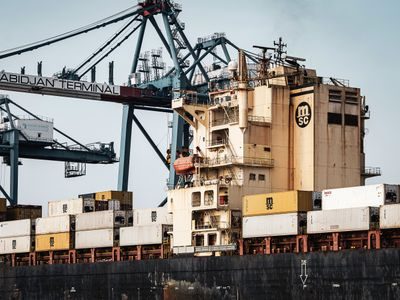
Is the African market an opportunity or a trap?
People who call Africa a blue ocean and people who call it a minefield are often both right. The difference comes down to three things: what you sell, who you sell to, and how you get paid.
Start with the demand side: 54 countries, over 1.4 billion people, a thin manufacturing base. Daily consumer goods, agricultural machinery, construction materials, and mobile phone accessories are almost entirely import-dependent — and China's production capacity is a genuine advantage here. Now the supply side: most African countries have strict currency controls, volatile exchange rates, and chaotic customs systems, which breed "too good to be true" order traps.
Looking back, Lao Chen spotted three red flags in that first deal: the customer never negotiated on price, demanded full payment before the goods arrived at the port, and had no verifiable business registration. The order volume blinded him to all of them.
Which sectors work: four proven categories
▸ Small appliances and daily necessities: rice cookers, electric fans, juicers — low unit price, fast turnover, sold through wholesale channels. The most mature category in Africa.
▸ Agricultural machinery and inputs: mechanization rates are extremely low. Small tractors, water pumps, and seed-treatment equipment have strong demand, high margins, but long payment cycles.
▸ Construction materials: color steel roofing, cement, door and window profiles — riding local infrastructure booms. High volume, thin margins, best for well-capitalized companies.
▸ Mobile accessories and electronics: power banks, data cables, earphones — high repurchase rates but also the fiercest competition. Channel is everything.
Choosing the right country matters as much as choosing the right product. Nigeria, Kenya, Ghana, and Tanzania are the traditional volume markets, but currency controls are tight across the board. Ethiopia and Rwanda are more stable but have smaller markets. There's no universal answer — only what fits your working-capital tolerance.
Payment methods: L/C, T/T, and the deadly "30% upfront"
The most common African order structure is 30% deposit plus 70% balance. It sounds reasonable. In practice, whether you ever see the balance is a coin toss.
Telegraphic transfer (T/T) is the easiest for the buyer — and the riskiest for the exporter. Once the goods leave your hands, the leverage shifts entirely to the customer. That US$120,000 Lao Chen lost? It was the 70% balance on a T/T deal.
Letters of credit (L/C) are safer, especially for first-time large customers. But African L/Cs come with two traps: (1) issuing-bank quality varies wildly — an L/C from a tiny local bank may not even be accepted by your Chinese bank; (2) the documentary requirements are strict, and a single discrepancy can trigger non-payment. Before accepting an L/C, verify that the issuing bank has normal Swift operations, and push for confirmation by a major international bank.
There's also a middle path: ask for a payment guarantee from a recognized local bank, or use D/P (documents against payment) — the bill of lading is only released once the buyer pays up. Every extra safeguard counts.
Customer due diligence: don't skip this step
In China, you check a company on Tianyancha and have the full picture in seconds. Checking an African buyer is ten times harder — but not impossible.
First, ask for the business license and tax registration, and cross-check against official records. Second, verify through the local Chinese commercial counselor's office or the Chinese Chamber of Commerce — many have public member directories and blacklists. Third, request a bank reference letter; any legitimate importer can produce one. Fourth, if the order volume justifies it, send someone for a site visit before shipping. Lagos, Nairobi, and other hubs all have Chinese-run service providers who can do this for a fee.
Lao Chen's second deal was saved by exactly this process: the background check revealed the customer was on a Chamber of Commerce blacklist. He pulled out immediately. He lost the sampling fee but protected a US$400,000 pipeline.
Customs clearance: tariffs, certifications, and the "clearance agent" minefield
The real story begins when the goods hit the destination port. Tariff regimes vary wildly across Africa: Nigeria's duties plus surcharges can reach 30%–50% of the cargo value, and policies shift with little notice.
Certification is another hurdle: Nigeria's SONCAP, Kenya's PVOC, Egypt's EAC — these are pre-shipment conformity certificates that must be obtained before the goods leave China. Without them, your cargo either gets rejected at the port or slapped with massive fines. One of Lao Chen's peers had a container sitting at Lagos port for two months without SONCAP; the demurrage charges alone hit over US$20,000.
Local clearance agents are the wild card. A proper agent gives you itemized customs documents and fee breakdowns. A dodgy one quotes a single bundled price — and any tariff shortfall or penalty lands on you. Before hiring an agent, demand their business license and past clearance cases. Chinese-run agencies that know local customs rules are often the safest choice.
Lao Chen's second deal: four things he got right
One: switched to L/C confirmed by a major international bank. Two: secured SONCAP certification before shipping. Three: hired a Chinese-run clearance agent with ten years of local experience. Four: wrote payment milestones and document-release terms into the contract — one shipment, one settlement, no credit.
The result: from dispatch to final payment, 75 days door to door. Not a dollar in extra costs. The customer became a repeat buyer — precisely because the process was transparent.
Africa is not impossible. What it can't tolerate is wishful thinking. Get three things right — customer due diligence, payment structure, and certification plus clearance — and Africa becomes a genuine blue ocean for Chinese exporters. Get them wrong, and it's a tuition-charging machine.
FAQ
Q1: What's the safest payment method for a first-time African customer?
A1: L/C confirmed by a recognized international bank is the gold standard. D/P (documents against payment) is a reasonable fallback — the bill of lading is only released upon payment. Pure T/T carries the highest risk; always collect enough deposit to cover your costs before starting production.
Q2: Why does African customs clearance keep going wrong?
A2: Complex tariff structures, frequent policy changes, country-specific certifications (Nigeria SONCAP, Kenya PVOC, etc.), and uneven local agent quality. Secure your certifications before shipping, pick a vetted agent, and spell out clearance responsibility in the contract.
Q3: How do I tell if an African buyer is legitimate?
A3: Check registration records, verify with the local Chinese Chamber of Commerce, request a bank reference letter, and consider a site visit. Three red flags to watch: refusal to negotiate on price, demand for payment before goods arrive at port, and unverifiable registration details. Any one of these should slow you down.
Q4: Which sectors are working well in Africa right now?
A4: Small appliances and daily necessities, agricultural machinery and inputs, construction materials, and mobile accessories are the four mature categories. Beyond sector choice, country selection matters equally — prioritize nations with looser currency controls and stable policy environments.